Don’t Wait to do Your Dreams

I have wanted to come here for a long time. Finally today I did.

The Oklahoma City National Memorial and Museum is the one memorial that I could feel even through the television.

Image

Chairs in golden hues stand together but apart, all facing the same direction and overlooking a reflecting pool in collective silence.

Little chairs rise small amidst the larger chairs, in memory of the children who were killed here.

ImageImage

It was a day of powerful reminders that life is short and must be lived right now.
It was a day of taking stock on quiet sacred grounds.
I started in Joplin, Missouri: 161 dead.
Then to the Oklahoma City Memorial: 168 dead.
Then to Moore, Oklahoma: 23 dead.
Those are lives, not numbers.
I am certain there were dreams that died in Joplin, OKC and Moore. Dreams that may have come true a day, a week or a month down the road.
I think the best way to honor those who have died at the hands of nature’s fury or man’s madness is to live our lives today. To make steps toward living our dreams.
And because of what I witnessed today, I intend to show up in the world in a more intentional way and to appreciate the gifts of life and freedom with renewed vigor and grace.
Posted in Travel | Tagged , , , , , , , , , , , | Leave a comment

Not Just Dance

A diamond in the rough, a New Mexico school of dance is also a school of thought, turning out dancers with a can-do mindset and a skillset to match.                                                                          
Deborah Rogers’ voice rises above the teenage chatter. “Girls, everyone in second position on the wall, please.” Founder and artistic director of Ruidoso Dance Ensemble (RDE), Rogers watches as 20 dancers move quickly to the walls — their hair in buns, dressed in leotards, tights and ballet shoes. The black flooring of the studio, its mirrors and ballet barre are brought to life with the energy of the dancers, and this snapshot at the start of class encapsulates the essence of RDE.  Dance is taken seriously, as is respect. People say please and thank you, and there is a zero tolerance policy toward foul language. 
 
Rogers teaches students to be tough, but they find equal parts discipline and love here. Many of the 70 dancers call the studio a second home, consider fellow classmates family, and see Rogers as a second mother. 
 
Rogers is an elegant role model, and her 50 years of dance experience are revealed in the intricacies she imparts in her teaching. Chin up. Chest open. Elbows soft. Even though RDE is located in south-central New Mexico, it exudes the same professional vibe as top dance studios in New York City. 
Image
 
Building Strong Bodies and Minds
  
Children ranging in age from three to 18 come to RDE to dance, but they learn much more than ballet, tap and jazz.  
 
“What I like to have is a learning environment at all times,” says Rogers. 
 
While building a dance base through ballet, dancers are also building a foundation of social skills which will serve them for life. Through the 12 years of RDE’s existence, Rogers has watched her students grow from shy toddlers to teens with self-esteem, strength and smarts.
 
“I tell them, you are going to be so successful in whatever you do. It doesn’t matter if you are a ballerina. You could be an accountant, an engineer, whatever. You’ve got skills. Not just dance skills,” says Rogers.
 
It’s a message the dancers hear and internalize.
 
Aidan Haney is a radiant 17 year-old, and to meet her you’d never know she’s already survived cancer. At age 10, she was diagnosed with leukemia, a road she traveled for four long years. Now a healthy high school graduate, Haney says there were times during chemotherapy when she was too weak to walk. But as soon as she could, she danced her way through treatment, one plié at a time. 
 
“I didn’t just sit at home. I actually went to dance, and that really helped me feel better about myself,” she says. “It helped me get through it.”
 
Through it and into the future, where Haney plans to study dance and neuroscience at Duke University. 
 
For 14 year-old dancer, Ariana McLeod, dance is a platform for expression. And even though she has experienced injuries and surgery, she is undaunted. Her eyes sparkle when she tells you she plans to dance forever. 
 
“When you come here, you can forget about everything and just dance with the people you love,” she says. “It’s something I can’t live without.” 
 
This level of maturity is evident in younger dancers too, like nine year-old Regan Forster who remembers her first dance performance. Scared, she cried through the entire show, but she didn’t give up. Ask her why, and she explains her perseverance like this: “If I quit, I would not come over my fears.”
 
These dancers are driven and goal-oriented. With three shows a year, there is an ever-present air of anticipation and a mindfulness that deadlines are looming. To dance at RDE is to have grit, and it is not for the casually committed. Each student dances for an average of 12 hours each week, and to participate in a large scale production such as the Nutcracker or Le Corsaire, dancers must attend at least 80 percent of practices. Behind the serene faces and demeanor, dancers push the boundaries of mental and physical stamina. Feet bleed, bodies are stressed and inner mettle is tested.
 
“There is a lot of hard work and dedication,” says McLeod. We’re not just these pretty little ballerinas. It’s a lot more hard core.”
 
Image
 
Labor of Love
 
It’s that kind of heart that Robert Phaup has observed in dancers and performers throughout his 36 years of music and theater experience.  A tireless and seasoned stage veteran, Phaup is in charge of production design and management for RDE, as well as technical director for the Spencer Theater for the Performing Arts where RDE’s biggest productions are staged. 
 
Phaup and his crew work closely with Rogers, and together they marry the artistic vision of dance with a stage experience so elaborate that in the end, it “will knock your socks off,” says Phaup.  To pull that off, there is also a small army of dedicated community volunteers who do everything from constructing sets to sewing costumes.   Phaup lights up when sharing moments from performances past — like the time a metaphorical electrical charge shot through the dancers when they nailed their big finish. “The audience felt that energy, and then they exploded!” For his part, Phaup was glad he was in a sound-proof booth. “I yelled and threw my pencil across the room! It was just that amazing to watch.”
 
The love that comes through from both Rogers and Phaup for dance and the dancers themselves is self-evident. But what’s even more telling is the fact that RDE is a 501c3 non-profit, and neither Rogers nor Phaup earns an income for the hours of labor they put into RDE projects. To suggest they are committed to what they are doing is an understatement — often working upwards of 80 hours a week. They both wear many hats and occasionally dip into their own pockets to make their vision come to life. 
 
They know too well there is a flip side to their current reality. It is the question of sustainability. How will RDE live on without them if the sweat equity they invest now is not matched by real dollars down the road? 
 
“We want it to go beyond us,” says Phaup.  
 
The cost of doing the shows is high, but their monetary needs are not just about maintaining a professional tier production value. The real goal is to continue to change lives for the better — those of the dancers and the audiences they entertain. 
 
Phaup says that they want to expand the existing scholarship program so they can reach even more low income families, explaining that he wants everyone to have this dance opportunity.  “To be able to do this, we have to get funding.” The need is palpable, and the thought fills the quiet theater.
 
Back at the studio, the dancers are focused — for a time, safe and unencumbered by peer pressure and teenage worries. Staccato musical notes rise into the air, as though punctuating the motto painted across the wall in gold script: “To watch us dance is to hear our hearts.” 
Image
 
Posted in Travel | Tagged , , , , , , , , , , | 2 Comments

Where Is Home?

Even the most independent person craves a sense of belonging — within a family, a workplace, a community. It’s part of the human experience.

Seated over a cup of hot coffee in a cafe on Chicago’s south side, 56 year-old Anita Ong is thinking about country.

“I was born in the Philippines,” she says. “My parents were from China.”

She pauses.

“So! I am in between.”

Her words carry a bright tone, but her facial expression reveals resignation.  She is taking me through the past, as though we are there.

“In between” because even though Anita was born in the Philippines, she doesn’t have birthright citizenship there. Instead, citizenship follows that of one’s parents.

Image

In the late 1940’s, around the time Mao Zedong’s Communist Party was declaring victory over the Nationalists, Anita’s parents left China — her father first, then her mother.

“My father went to the Philippines because life was really difficult in his home town — a small rural area. And my grandparents were really poor.”

Anita is the seventh of nine children, all of whom were born in the Philippines. Along with her siblings, young Anita grew up in Laguna and Manila and attended Chinese school.

She had to be linguistically nimble.

“In the morning, we studied English lessons, and in the afternoon, we studied a combination of Mandarin and Fukienese (both Chinese dialects). At home, we spoke Tagalog (the official language of the Philippines) and a little Fukienese.”

To say she was a girl without a country is not far off…

I try to think of the long-term implications of this arrangement. How does one travel without a passport from your home country? How does one answer the question of nationality? What of the question of voting some day?

School of Life

Anita shares accomplishments with humility and brevity.

“In the Philippines, I ended up in medical school. I finished, and I did my residency in pathology.”

Upon completion, rather than a license and a medical practice, Anita received some bitter medicine. Suddenly, her career path appeared to be no more than a dead end. Or perhaps, an “in between” space. Since Anita was not a citizen of the Philippines, she could not practice medicine there.

“It was very frustrating, because when I was doing my residency, my teachers told me that I was a GOOD pathologist.” Anita hints that this was a new kind of praise, a new-found and certain aptitude.

Beyond the issues of personal identity and pride, there was a financial question that accompanied the news: How would Anita earn a sufficient living? While staying with her parents, Anita remembers thinking, “there should be something better for me than this.”

Her mother agreed and encouraged her to go to the United States.

“I had been living a very sheltered life.” Anita spoke softly now. “What would I do in the U.S.?”

Her sister was living in California, but apart from her, she didn’t know anyone.  “I would be on my own,” she reflects. “It’s sort of scary.”

USA 

Anita boarded a plane bound for Los Angeles, traveling on a Taiwanese passport.

“If a person like me does not have a passport, you can choose either a PRC (People’s Republic of China) passport or ROC (Republic of China), which is a Taiwan passport.”

Anita has never lived in either mainland China or Taiwan.

She landed in California and visited her sister in Redlands for a few weeks. She remembers those first impressions with vivid detail. “There were a lot of citrus trees. I could smell the orange blossoms, and that was wonderful. I thought it was a beautiful place.

“Everything in America seemed to be bigger, grander and brighter.”

Weeks later, she made her way to the Midwest, specifically, the University of Illinois in Chicago. There, she would repeat her residency in pathology and add two sub-specialties.

“I realized I can survive.”

Image

Despite cold urban commutes through dark Chicago winters, Anita felt at home — both in Chicago and in her area of medicine.

“I like details. I obsess with details!” she laughs. “Pathology has a lot of details.”

And in pathology, there is less patient contact, which also suits Anita.

“I like dealing with people sometimes, but sometimes I get shy. And sometimes, it’s a little overwhelming.

“Generally, we are in the background,” she says of herself and her fellow pathologists.

Intermingled with mention of microscopes and objective lenses, Anita says, “We have specimens. They don’t have faces, so in a way, it’s easier.”

Anita wanted to do this kind of work for many years to come.  She wanted to practice medicine in the United States.

Her superiors wanted that too.

Working visa.

Green card.

Employment.

Home.

Sort of.

 July 3, 2013

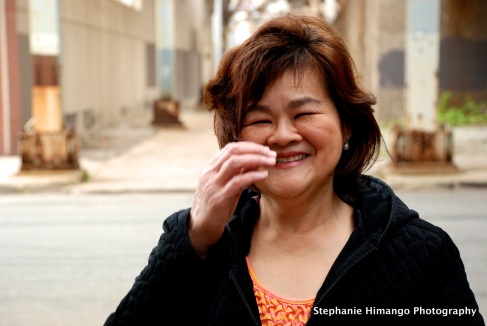
“Will it sound bad to say that I wanted to be a citizen of a country?” Anita asks me. “I wanted to be a citizen.

“Life has been GOOD to me here.”

Anita was working at the hospital when a woman called from a government office: Anita was going to be sworn in as a United States citizen on July 3, 2013.

“They usually don’t call people, but this was such short notice.” Anita is speaking faster. “She left a message on my cellphone and on my home, so it was like listening to the good news TWICE!” She is laughing now. “Actually, I listened to it a number of times!”

On July 3, Anita went to work, then left for the ceremony at around lunchtime. “I was so excited! So restless!”

In an ordinary room set up with rows of chairs, Anita estimated there were about 60 people, from about 30 countries. They recited the Pledge of Allegiance. Mayor Rahm Emanuel spoke.

“Then there’s a portion of the program where they call the country.”  People from that country are to stand at that time.

“And I was thinking, ‘Should I stand up for the Philippines? Should I stand up for China? Should I stand up for Taiwan? I should stand up for Taiwan, but then, would they have a slot for Taiwan?’

“They did,” she smiles. “So I stood up for Taiwan.”

As soon as Anita’s ceremony was complete and she was a U.S. citizen, she left the room and encountered a man distributing voting forms.

“The FIRST thing I did as an American citizen was register to vote!” Anita can’t contain her excitement. She has never been able to vote in her 56 years of life. “I can have the EXPERIENCE of voting. It makes me feel like I’m doing something MEANINGFUL. It is a privilege!

Then she looks at me deviously.

“Do you want to know what my SECOND thing was?”

Yes.

“I went to McDonald’s! My second act as an American citizen was to eat a burger!” she laughs. “I didn’t get fries though. I was feeling guilty.”

She went back to work that day as a citizen of the United States. “I was showing off my certificate, and some of my friends called me.

“I was so happy! Really. I was very happy. And now, when I think of it, I can’t help but smile!”

A friend asked Anita what she wanted to do to celebrate. Nothing much. She doesn’t like crowds. They talked playfully about eating hot dogs and burgers, watching the fireworks and buying red, white and blue carnations.

Image

July 4, 2013

Instead, they decided to get together for a low-key movie-watching afternoon at Anita’s friend’s apartment.

“He said he needed to stop at the laundry room,” says Anita. “So we went down this corridor, and suddenly there were these people saying ‘surprise’! They were cheering!

“I was just so surprised and speechless for I don’t know, a few minutes, I was just standing there and laughing. I felt like I wanted to cry and laugh.

“It was such a heart-warming gesture. It was such a happy…” Her voice trails off and she wipes her eyes.

“There are so many people who care for me….”

Anita received symbolic gifts from her friends that day — a flag brooch, a necklace with a heart-shaped locket bearing red and blue stones, a shawl that is an American flag.

She also received a copy of the Constitution of the United States.

“One guest made copies of the Declaration of Independence and distributed them so everybody could read a portion of the document and discuss,” says Anita.

“I read the first paragraph of the Declaration of Independence.”

“When in the course of human events, it becomes necessary…”
Image

Posted in Travel | Tagged , , , , , , , , , , , , , | 1 Comment

Hats Off

When I stepped inside Goorin Bros. Hat Shop in Chicago, there were hats on every table and every shelf — fedoras and flatcaps, baseball and bowlers. There, I met Tanya Jaramilla, and not unlike the establishment itself, she wears many hats: shopkeeper, wife, sister, student.

“I’ll be the first person in the whole family to graduate from college.”

Image

Tanya is 32 years old and approximately one year away from earning a Bachelor’s degree in Management and Communications from DePaul University.

Tanya’s grandparents came to the Windy City in the 1950’s from Puerto Rico on the promise of steady factory work.

“For my family, it was a BIG deal to finish high school.

“For me, I always wanted bigger and better and more.”

Tanya was certain she would go to college.

“I just didn’t know when or how or what that would look like. It’s really, really, really important that I get my degree and graduate — do the whole shebang!”

If you’re doing the math, you already guessed there was a detour after high school that Tanya will tell you was worth every minute and helped her become the person she is today.

Image

“I have no regrets, because if I hadn’t lived the life I already lived, I wouldn’t be living the life I have now. I run this fantastic little hat shop. The people that work for me are great, and the people that come and shop here are great. I’m doing school the way I wanted to do it, which is with all my focus and energy and attention.”

Straight out of high school, Tanya worked part-time at a Gap store and was soon promoted to a full-time manager position. What had been a balancing act between work and college tipped. “I did that for a really long time. And school just kind of fell to the back burner.”

Simultaneously, Tanya was in a long-term relationship.  About seven years later, and in a cloud of mistrust, Tanya’s relationship ended in a break-up that became a total life shake-up. She changed her job, her home, her city.

“I left and went to Vegas to live for a few months with my grandma, and that was one of the best experiences I ever had. I was able to connect with her on a level that I’d never done before.  We talked about her life, and I learned stories about her struggle.

“It really affirmed for me the decision that I had made to move on and change and do something that was right for me. So when it was time for me to come back to Chicago, I came back with a cleansed soul. I felt like a new me. I felt like the me that I was trying to get to for the last six or seven years, and it just never happened because I kept letting my comfort get in the way of it.”

Tanya says she wanted to do something important. Something that makes a difference. Something she could be passionate about. She found it in a non-profit organization called the Puerto Rican Arts Alliance.

“It was a little surreal at the beginning because I was so used to having to struggle. And having to overcome something.

“I started digging in. I started really working with the organization in the community.”

And she realized something.

“This is what I was supposed to do, you know? It was meant to be. I was meant to get to know these young people who have all of these aspirations but no real support or access to resources. I was able to provide that for them in ways that they never had before.”

Tanya remembers an inquisitive little girl named Susie. “She made me feel like I … showed her that you don’t have to succumb to the neighborhood that you’re from. You don’t have to fall into the traps that the community around you sets for you.

“That’s something I try to instill in my little sisters. They are young moms, and it’s a conversation that I’ve had with them over and over. You don’t have to settle.

“I was settling for a really long time.” She thinks back to that old relationship. “Once I finally broke free of that, it was really important for me to make sure they understood that their lot in life doesn’t necessarily have to be that. They can work harder, they can be better, they can do more, if they want to.

“I grew as a person from my relationship experiences, but also as a woman.”

Tanya says in her relationship, she had become someone other than who she wanted to be. “In order to fulfill someone else’s happiness, I was turning a blind eye. I was in denial. The biggest challenge for me: being honest with myself.

“Another thing I taught my sisters was that people will only do to you what you allow them to.

“If I continue to let someone treat me terribly, they’re going to keep treating me terribly. Because I’m not putting a stop to it. And I’m not ending it. It gives them the message that that’s ok. And it’s not ok.

When Tanya was 27, that year was filled with introspection.  “I did a lot of digging into myself and thinking and feeling.

“It wasn’t easy. I don’t think those moments in life ever are. But I think it paved the way for me to be the person I am today. I feel like I am much stronger. I’m more confident. I have a better view of what my future’s going to be like.”

A future that includes her new husband Sonny Jaramilla. They were married just last month.

“When I found him, I realized that all of the things that I had worked through and I had lived through … that was preparation for me to get my mind right and my head right and my heart right and my soul right, so that when he came along, I was ready.”

Image

It was Sonny who reminded Tanya of her dream of graduating from college. “He gave me the kick in the butt.

“He is the one who encouraged me to leave the non-profit so that I could focus on school without having to try and juggle the two.”

Tanya is not abandoning her mission of making an impact on the community. She’s investing in it through education. And going forward, she plans to find ways to give young people who are from low income neighborhoods opportunities to engage in the arts.

“I’m very urban. I’ve lived in Chicago pretty much my whole life. And I know the challenges that urban life can bring.  But I also feel like there’s some opportunity and some beauty in that.

“Everyone cannot live in Lakeview, but that doesn’t mean you can’t still enjoy the neighborhood and the community that you’re in. It should still be safe, and it should still be beautiful, and it should still be full of life and creativity!”

And that is where Tanya says her future will find her.

But first, she will keep working toward the day when she dons the style-impaired mortarboard and turns the tassel from right to left.

After that, Tanya will be wearing a proud new custom hat, in a style all her own.

Posted in Travel | Tagged , , , , , , , , , | 2 Comments

Easy Come, Easy Go

It’s Jeff Lynch’s third day behind the bar at the Green Door Tavern.

“We’re definitely an old school joint!”

He glides back and forth from tap to register, at once jovial and relaxed.

His usual title is general manager, but today he’s pinch hitting as bartender.

A Reds fan and Cincinnati kid born and raised, Jeff studied accounting and moved to Chicago in 1999 after landing a job in real estate.  Later, the company Jeff worked for bought the Green Door Tavern.

“With the downturn, I was losing productivity,” says Jeff about real estate. “So I went to the managers and said, ‘Hey, we’re paying this company to manage the Green Door for us. I can do it. I’m good with people. I’m good with numbers. I’m good with everything. Just pay me a little bit of an increase. I’ll do this real estate stuff, and I’ll do bar stuff.’

“My dad owned convenience stores in Cincinnati. And I think my entrepreneurial background with my dad kind of helped me know that I like to shoot the shit… bleep that out!” he smiles…”rather than dealing with real estate and buildings.”

Image

Once you’ve passed through the crooked original green door bearing the number 678, you’ve already time-traveled. The vibe is relaxed, yet lively, and the decor is sort of clean country cabin meets antique controlled chaos. Signs, billboards, pictures, mirrors, lamps, wooden bar, pool table. It’s very cool as a stand alone, but it’s the basement below that tells the full story of the green door.

“Back in the days of Prohibition, if your door was painted green, that meant you had bootlegged liquor inside.”

Go down the back stairs and you’ll find giant antique circus canvases and artwork in faded hues that will transport you to an era long past. Leather saddles drape the small wooden stage railing and dramatic lighting makes you feel you’re in an establishment once forbidden.

Image

For a time, that was true.

Prohibition gave birth to a liquor-producing underworld and the advent of the speakeasy. Some say there is truth to the legend that mobster, bootlegger and florist Dean O’Banion’s North Side Gang hung out in the space beneath the Green Door Tavern. That may have ended when bad blood between O’Banion and the Chicago Outfit run by Johnny Torrio and Al Capone led to O’Banion’s murder … as the story goes …  shot dead as he cut chrysanthemums in his flower shop near the Holy Name Cathedral.

“It is one of the best private party rooms in the city. Has to be. You’ve got the atmosphere and the decor and the history.

“My wedding was actually here!” Jeff is quickly back to his 2012 wedding to wife, Sue, who he met at the Green Door.

“We entered off the street through the speakeasy. People dropped their gifts. We had a champagne line here,” he says, pointing to the bar. “They grabbed their champagne, went up the stairs and the whole place was set up!”

Like a stream-of-consciousness sparkling memory, the words flow:

“It was the best day of my life… it was awesome… it was so much fun… linen table cloths … flowers… it looked like a million bucks in here!”

Jeff is nodding and smiling, proud yet humble.

“It was cool.”

Image

He pulls two draught beers for a couple of sun-baked Australian guys who belly up to the bar and make a day of it at the Green Door. So much for the other places on their pub crawl. They found everything they wanted in this old place.

The Prohibition-era mobsters make for a rich historical fabric, but there’s more.

“It was built after the fire …” says Jeff, referencing the Great Chicago Fire of 1871.

You may recall, that deadly blaze started one October night in the barn of Patrick and Catherine O’Leary. By the time it was over, according to the Chicago Historical Society, the heart of the city was devastated, at least 300 people had died, 100,000 people were made homeless and $200 million worth of property was destroyed.

“After the fire …” he continues, “… and before the ordinance that said you can’t have free-standing commercial wood structures in downtown Chicago.

“So we are in fact the last…

“In the middle of high rises and million dollar condos, night clubs and fancy bars, we’re just a regular old place. And that is the key to us.

“We’re not a hoity-toity place where if we have four-top tables and a group of six comes in and moves the tables together, we’re not going to …

“Just go ahead! Sit down. Drink and chill out.”

Some say it’s Chicago’s oldest establishment — but that is up for debate, and for many people, it’s just semantics.

“We’re the oldest tavern, for sure,” says Jeff. Some say the Berghoff carries that distinction. “I think they’re older, but they are not considered a tavern.

“We’re definitely one of a kind. We’re definitely historic. And we’re a Chicago institution.”

Country music filters through the room this Tuesday afternoon, mingling with iconic posters of Marilyn Monroe, neon signs, college team banners and stuffed hunting prizes.  As my eyes scan the room, the walls seem to rise and fall a little with each new discovery, like a living breathing document, one that holds secrets from the past while registering new information daily.

“Some people call us a dive bar. Some people call us a neighborhood tavern. Some people call us a saloon. We’re just here.

“We’re just here serving you drinks and food, and it’s a nice place to relax. You don’t need to dress up. You don’t need to be crazy.

“For the most part, I wouldn’t change anything.”

As I make my way toward the green door leading back onto Orleans street, a favorite and fitting country tune walks me out…..

Goodbye. Farewell. So long. Vaya con Dios. Good luck. Wish you well. Take it slow. Easy come, girl, easy go.

Posted in Travel | Tagged , , , , , , , , , , | Leave a comment

Soul of a Cowboy

Greg Hathcock can swear like a sailor and quote the Bible like a preacher.

One moment he was a stranger in a New Mexico Starbucks, the next, he was standing near my table with a smile and earnestness in his eyes. “I needed to come over here and tell you to have a good day.” 

I heard a hint of the South. I sensed kindness. I saw a touch of cowboy.

But there is always more, isn’t there? We all have pieces. We are all a patchwork quilt. We are all a coat of many colors.

For example, there are people who know Greg the quarter horse trainer, but they don’t know Greg the Tennessee farm boy who chopped cotton and pulled corn. They know Greg the Grazing Bull restaurant owner, but they don’t know Greg the 1963 state track champion in the 100 and 220 dash. They know Greg the father of three who has been married for 31 years, but they don’t know Greg who enjoys a mocha alone at the cafe most mornings. They know Greg the jocular sweetheart who will turn 69 in July, but they don’t know Greg the bull rider. They know Greg the high school running back, but they don’t know Greg who broke a mustang. They know Greg who has a soft spot for people, but they don’t know Greg who wants to make a feature film. They know Greg the boy who didn’t like school very much, but they don’t know Greg the boy who suffered regular beatings from his parents at home.

Image

But there is no self-pity. Just self-reflection. There is no regret. Just determination. There is no speaking of what is not, only of what can be. When you talk with him, you get his passion for horses and for life, and what he has to share may blow you away.

The Track and the Truth

Greg’s fast feet on the track as a kid have been replaced by fast quarter horses as an adult. A trainer for more than 20 years now, he knows the dark side of the race world and it lights a fire in his belly.

“I’ve seen horses drop dead at the finish line. There’s no reason for the horse to drop dead at the finish line…”

Mistreatment of these animals is something he can’t tolerate, and he doesn’t mince words.

“…unless they got shit in him that they ain’t supposed to have in him. That will kill him. I’ve had them come back after they finish the race, and they drop dead right there when they unsaddle them.

“That-should-not-happen! That’s cruel and inhumane and downright un-Christian-like, if you want to know the truth — do an animal that way.” He leans in and locks his eyes on mine. “If you train your animal, and you feed that animal, and you take good care of that animal, they’re gonna wanna run.”

He wants me to understand that no amount of drugs will change a horse’s potential, and he uses racing lingo to make his point: “You can hang every drug in the world in me, and I can’t play basketball like Michael Jordan. You understand? You only got so much speed in that horse.”

You Gotta Have Heart

We sat down over a pot of coffee at his Grazing Bull restaurant in Capitan, New Mexico, and I asked him if he had a philosophy he lives his life by. I could not have hoped for a better response. You might want to sit down.

Image

“I love setting goals every day to accomplish something. If I’m 80 years old, I’ll still be getting up and going to accomplish something, because you never get too old or too tired to do something.

“No matter what disappointments you have in life, no matter how many failures you have in life, you never quit. Because sooner or later, you’re going to do something that fits. And you will be successful at it.

“But if you are going to say ‘I can’t’, ‘I’m sick’, ‘I don’t feel good’, you’re not gonna accomplish nothing. You gotta get up.

“You gotta have a lot of HEART in this world. Even if you’re going to an eight-to-five job every day, you gotta have heart. That’s all there is to it. So, if you’re gonna have heart, plan a big thing. You show me a dreamer, and I’ll show you a guy that landed on the moon!

“You gotta set goals and you gotta have BIG goals. ‘Cause God will help you accomplish being President of the United States of America as he would the Mayor of Capitan. You set the stage in your mind right there. But you cannot be a quitter. You have got to keep going no matter how many times you fall down. ‘Cause that’s the only way to make it. I’m telling you, you fall down, get up, dust your pants off, and say ‘I’m gonna do it.’

“And I had to do that a lot. I still do it a lot. And a lot of people wonder why I’m doing it at my age, but I don’t ever want to quit. I like LIVING, I like LIFE.

“Be a CAN-do person, not a CAN’T-do person.  No matter what your goal is, the same energy is flowing through you to do a big goal as it is to do a little goal. So set your sights high.

“Get up and say you feel good, ‘I am healthy, I am well, I’m beautiful, I’m talented, I’m empowered.’ You say that every day, and it will work.

“You know, your words are so creat–ive.” He breaks the word, lending it new meaning.

“Life and death are in the tongue. I think it’s Proverbs 18:21. ‘Life and death are in the tongue. And you will reap the fruits thereof.’ LIFE and DEATH. POSITIVE and NEGATIVE. And what your words are are creat–ive.  It’s no question about it.

“If you speak words long enough, I GUARANTEE that’s what’s going to happen. If you want to look at the way your life’s going to be five years from now, see how you’re speaking right now and it’ll be exactly that way.

“You’ve got to fill your brain with the positive. Somewhere in the Bible, ‘think of things that are NOT as if they WERE.’ It’s in there. It’s in the Bible. Job said ‘the thing that I feared has come upon me.’ So if you’re sitting around thinking about negative, fearful things, that’s what you’re creating and breeding in your mind, and it’s going to manifest in your life. I done see it happen too many times!

“It takes EFFORT to be positive. It takes effort to ACCOMPLISH. It takes effort. It takes effort every morning to get up and to FEEL good. But you gotta TELL yourself. Hey, when I feel bad, ‘I feel good.’ The Bible says ‘let the weak say they’re strong.’ Same thing!”

Greg fills our coffee cups again and as he does, he continues.

“If I don’t have somebody around that I can help do something, I feel like I’m lost a lot of times,” he says.

“I like young people. I like youth, and I wish I could just open their brains sometimes and pour into them what I already know.”

Greg’s words draw his 23-year-old waitress and friend Kalyn over to join us at the table. Greg thinks of her like another daughter.

“I’m gonna tell you something else,” he said to me. “And I’ve never told Kalyn this.

“Kalyn’s an inspiration to me. I see such high qualities in her. And if I can do something to motivate her to be more than maybe she’s thinking sometimes, I’ll feel like I hung the moon.”

Follow anotherdooropens.net for more stories of doors and the people who live and work behind them.

Posted in Travel | Tagged , , , , , | 3 Comments

Disco Taco

Note to the Reader: I have started something new, and this is the first installment. Another Door Opens is a creative project documenting doors and the stories of people who live and work behind them. Through photography and storytelling, you will witness open doors and open hearts. You will see new corners of the United States and get a glimpse of your fellow man. Consider THIS an open door to take the trip with me. I’m inviting you along! Follow, and let’s road trip! Find the stories here or at AnotherDoorOpens.net.

Image

My morning eyes were diverted from the tar of I-70 by a flash of vibrant color painted across a building set back from the road.

“That’s where I’m going for lunch!” I declared to no one.

The sun was high in the New Mexico sky by the time I returned. As I stepped inside Disco Taco, it took a second for my eyes to adjust, and no sooner, David Medina was standing in front of me with a smile as warm as the southern sun. A few wisps of gray hair brightened his face even more, just below his temples and brushed through his mustache. The little restaurant with the 1970’s-era name exudes warmth — from the friendly welcome to the Mexican food to all eight tables topped with a yellow check cloth and a flower.

Based on the attentive and easy treatment I was given, I would have thought Medina had been taking care of restaurant customers forever. I would have thought he was more than comfortable in his role. I would have thought hospitality had been his line of work for a long time. In addition to his professional manner of speaking, he stood tall, and his tucked-in shirt and shined shoes told me he took pride in his work. On that last point, I would have thought right. But on the assumptions before that, no no no. I would have thought wrong.

Image

David Medina is the manager of this little spot, and has been since 2011. This job is a blessing in his view, and the offer to come work here arrived at just the right time.

For 31 years, Medina was an engineer in Juarez, Mexico, working at Delphi and making electrical harnesses for automobiles. He had stability. He had status.

Then he was laid off.

That was only part of the cascade of changes to come. At the same time, the small grocery store Medina and his wife had operated for 10 years in the border city was under threat. Juarez was rapidly destabilizing under the stress and violence of Mexican drug cartel activity, and it was not long before intimidating characters showed up at their grocery store. “Bad guys” began demanding money from Medina, and in exchange they would “allow” him to continue to do business. Some people call it protection money. The rest of us call it extortion.

Doors were closing for Medina, and as he and his family faced this new reality, something happened: another door opened, in response to action he’d taken about 14 years prior. Back in the 1990’s, Medina had applied to become a legal U.S. resident. And then at this critical juncture in his life, the paperwork finally came through.

His new life in the U.S. didn’t take off instantly. He and his wife struggled to find work and a place to live in El Paso, and even though the city was just across the border from Juarez, the new place and the new process felt foreign. Eventually Medina received the offer to come to the little town of Ruidoso Downs, where he had been a customer at Disco Taco on previous visits.

He is 55 years old now and is rebuilding his personal and professional life “from zero.”

“I don’t have any experience with this kind of business. I have experience buying and selling groceries.”

He pauses. “It’s really hard to start again.” While he’s happy that he and his wife have found a new opportunity in the U.S., until his grown children can join them from Mexico, he won’t feel whole.

But his optimism doesn’t fade. He said he feels he is being protected and implies that good things happen to him.

“In Mexico, we have a saying,” he says. “The best school is life.”

Posted in Travel | Tagged , , , , , , | Leave a comment

Let Your Warrior Out

That’s what a friend recently told me to do. How did he know I had a warrior in me? (We all do).

He was right, of course, and that’s exactly what I’m about to do.

Three hours from now I’ll be queued up at the starting line to run 3.34 miles and attack about 13 obstacles on the Warrior Dash New Mexico course. The number 13 represents transformation, doesn’t it? This could be positively transformative! Why would I spend a Saturday morning doing this? Well, why would I not, really?

First, it’s a good goal.

Second, it’s physical.

Third, it’s a good step outside my comfort zone, although I would argue in line with my inner badass.

Fourth, it’s a great cause. I’ve raised $2,345 for the little warriors at St. Jude Children’s Research Hospital. (Thanks to all of you who made that happen.)

Fifth, it gives me a chance to meet other people who want to let their warrior out.

Sixth, you get a wicked kind of warrior hat and t-shirt for it. The kind of shirt you’d want to wear and the kind of hat you’d never. Well, maybe just today.

Seventh, it brings me to the famous Balloon Fiesta Park in Albuquerque, New Mexico. Granted, it’s not October, and there is not a single hot air balloon there right now, but I would put money on the festival atmosphere being in full ascendance!

Eighth, it’s April 27th, and I have never spent an April 27th quite this way. So it’s a first.

Ninth, who doesn’t wish they had a reason to go get dirty in a muddy obstacle course?

Tenth, life is short. Get outside. Breathe the fresh air. Live a little!

Here I go. How will you let your warrior out today?

Posted in Travel | Tagged , , , , , , , , , , , | 2 Comments

United

Image

Loving energy is so palpable after tragedy. We pray and send wishes of strength and light to strangers. Our hearts genuinely ache, and we are sincere in our outpouring of compassion and love for families of the dead, injured, paramedics, law enforcement, doctors, nurses, civic leaders, volunteers, good samaritans, bystanders. We are tragically united in pain and love.

We are experiencing this today in the aftermath of the terror in Boston, just as we did in the aftermath of September 11th.

The same love that pours out as a counter-weight to tragedy is also felt for fleeting moments during positive occasions like the Olympics, when your skin tingles out of pure joy as athletes march at the opening ceremony, beaming mega-watt smiles of pride and wonder. As fireworks ring out high above in celebration, it’s love that fills you up and makes you feel like your heart will burst.

There is a oneness in these times. There is a feeling of unity when there is a collective feeling of love. We unite as one city, one nation, one world.

But for how long?

My prayer on this sad day is that we can stay united longer, stay loving longer, and remember our collective humanity longer.

Posted in Travel | Tagged , , , , , | 3 Comments

Playground No More

As I drove along the winding mountain road between Cloudcroft and Ruidoso, New Mexico, I was struck by the stark emptiness of this abandoned playground on a rural patch of land. The yellow field was lifeless — rocking horses and empty swings stopped in time. As I walked through the tall grass, I could hear only the howl of the wind in the pines, and the long chains of the swing set that clashed together like a fallen wind chime.

DSC_3164

DSC_3152

Posted in Travel | Tagged , , , | 3 Comments